In the process of using the uninterruptible power supply system, people tend to think that the battery is maintenance-free without paying attention to it. However, some data show that the proportion ofUPShost failure or abnormal operation caused by battery failure is about 1/3. It can be seen that strengthening the correct use and maintenance ofUPSbatteries has an increasingly important significance to prolong the service life of the batteries and reduce the failure rate of theUPSsystem. In addition to the selection of regular brand batteries, the correct use and maintenance of batteries should be carried out from the following aspects:
Maintain a suitable ambient temperature
An important factor affecting the battery life is the ambient temperature. Generally, the best ambient temperature required by battery manufacturers is between 20-25 °C. Although the increase in temperature has improved the discharge capacity of the battery, the price paid is that the life of the battery is greatly shortened. According to the test, once the ambient temperature exceeds 25 °C, the life of the battery will be shortened by half for every 10 °C increase. The batteries used inUPSare generally maintenance-free sealed lead-acid batteries, and the design life is generally 5 years, which can only be achieved in the environment required by the battery manufacturer. If it fails to meet the specified environmental requirements, the length of its life is very different. In addition, the increase of the ambient temperature will lead to the enhancement of the chemical activity inside the battery, thereby generating a large amount of heat energy, which in turn will increase the ambient temperature. This vicious circle will accelerate the shortening of the battery life.
Periodically charge and discharge
The float voltage and discharge voltage in theUPSpower supply have been debugged to the rated value at the factory, and the size of the discharge current increases with the increase of the load. The load should be adjusted reasonably during use, such as controlling electronic equipment such as microcomputers. number of units used. Under normal circumstances, the load should not exceed 60% of the rated load of theUPS. Within this range, the discharge current of the battery will not be over discharged.
Because theUPSis connected to the mains for a long time, in the use environment with high power supply quality and few mains power outages, the battery will be in a floating charge state for a long time, which will reduce the activity of the battery’s chemical energy and electrical energy conversion over time, and accelerate aging. and shorten the service life. Therefore, it should be fully discharged once every 2-3 months, and the discharge time can be determined according to the capacity and load of the battery. After a full-load discharge is completed, recharge for more than 8 hours according to regulations.
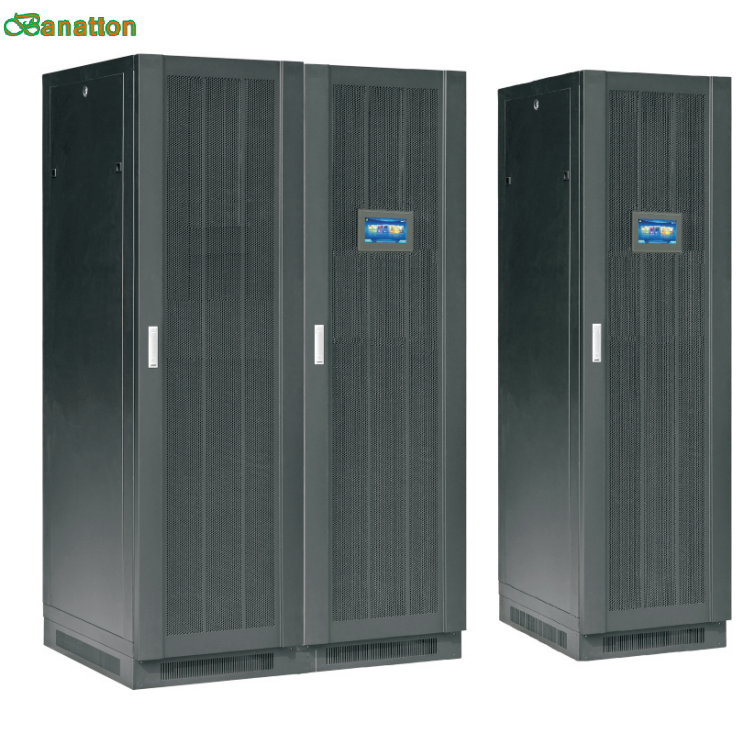
Use the communication function
The vast majority of large and medium-sizedUPShave operable performance such as communication with microcomputer and program control. Install the corresponding software on the microcomputer, connect theUPSthrough the serial/parallel port, run the program, and then use the microcomputer to communicate with theUPS. Generally, it has the functions of information query, parameter setting, timing setting, automatic shutdown and alarm. Through information query, you can obtain information such as mains input voltage,UPSoutput voltage, load utilization, battery capacity utilization, internal temperature and mains frequency; through parameter settings, you can set the basic characteristics ofUPS, battery maintenance time and Battery run out alarm, etc. Through these intelligent operations, the use and management of theUPSpower supply and its batteries are greatly facilitated.
Post time: Sep-26-2022